deVine Thoughts

July 16, 2014

Québécois Beer

Filed under: deVine's Daily Blog Article — Dirk @ 3:59 pm

quebec_beer_blogAuthor: Jim Phelan

One of the most common questions the deVine staff has encountered when conversing with fellow beer aficionados and customers (or both at the same time!) has been simple and direct: What is your favourite beer in the store?

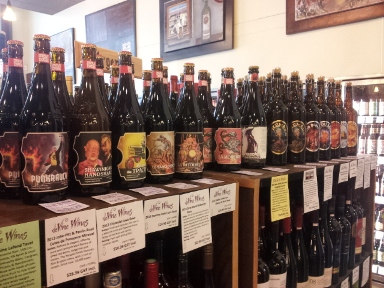
Obviously one’s favourite beer can depend on many things, including pairing, palate and style. But regardless on these factors, I’ve found myself drifting slightly more often to the full bodied and uniquely styled beers offered today by Quebec’s craft brewing scene. Though brewing in Quebec dates back centuries, the current market is driven by youthful dedication and has forged out its own niche in the world of craft beer.

Given the nature of this blogger’s academic interests, I hope our readers will forgive the following foray into Quebec’s brewing history. The early roots of Quebec brewing tradition date back to the 16th century in early colonial New France. In fact, beer was considered a dietary staple of North American colonialists. Malted ales helped prevent survey, were cleaner than most water sources, and of course were popular for morale-boosting recreational purposes. The founder of New France, Jacques Cartier, certainly had beer on board during his historical 1534 voyage. Further, his journals describe a spruce-based “concoction” brewed by the Aboriginal population which the French favoured and quickly adopted themselves. This was spruce beer, known most often as a non-alcoholic soda today, but its contemporary alcoholic variety made use of readily available spruce tree needles or buds in place of more difficult to find hops. Spruce beer, along with the odd alcoholic root beers (using the same concept) characterised Quebec brewing for two centuries. Even The Jesuit Relations, one of Canada’s earliest and most important ethnographic documents, known (in)famously to anyone who has taken a course in Canadian history, mentions a brother Ambroise preparing beer for the habitants in 1646. The region’s first brewery in written history also dates back to 1650, and the first commercial brewery, located in Quebec City, enjoyed a short lifespan in the 1870s.

Any Québécois artisanal brewing markets disappeared during 19th century, when at the height of industrialisation Englishmen and entrepreneur John Molson, founder of the Molson Brewing Company, established Quebec’s first industrial-scale brewery. They were followed by Labatt in 1847 and O’Keefe shortly after. These breweries essentially monopolised the Quebec and Canadian market until the 1980s, and were in fact the only three breweries in the province between 1960 and the early 1980s.

However, across North America during the 1980s a renaissance in craft brewing began. Specifically to Quebec, the Régie des alcools, des courses et des jeux (RACJ), Quebec’s equivalent to Alberta’s AGLC, began issuing new commercial brewing and sales permits for the first time in a generation. An abundance of brew-pubs and microbreweries began popping up across the province, starting with the Montreal’s famed Le Cheval Blanc on Ontario Street, founded in 1986. Today, there are well over 100 active breweries in Quebec producing over 3,000 different beers. deVine currently offers twenty of our favourite selections available in the province.

The brewing style of Quebec’s new generation is unquestionably defined by full-flavoured, complex and layered beers, blending elements of French, Belgian, and Canadian brew traditions. This approach, combined with the freedom to experiment and perfect batches quickly in brew-pub and micro-brew environments, has quickly created a stellar reputation for the Quebec brewing milieu. According to Beer Advocate, 26 of the 50 top crowd-source rated beers in Canada, judged by a crowd sourced ratings system, are brewed in Quebec.

These high rankings stem from a number of factors. The Québécois craft market is still quite young, with most active breweries opening in the mid 1990s or later. This youth movement is highly active, and carries a significant online presence, supported on beer websites and even dedicated magazines. In addition, we think you’ll find the beer coming out of Quebec today to be delicious and worthy of their strong reputation. But don’t feel the need to take our word for it, feel free to grab some of these Quebec brews the next time you stop into deVine:

Brasserie Dunham American Pale Ale (6 Bottles) – $19.49


Le Trou du Diable L’impératrice Brassin Spécial – 750mL – $18.99


Dieu du Ciel Blanche du Paradis (6 Bottles) – $18.49


2009 Charlevoix Dominus Vobiscum Hibernus 750mL – $17.99


2009 Charlevoix La Dominus Vobiscum Lupulus 750mL – $17.99


Dieu du Ciel La Divine Comédie Wit Pils (4 Bottles) – $12.49


St. Ambroise Maple Beer (4 Bottles) – $10.49


Brasserie Dunham IPA Belge 750mL – $8.99


Le Trou du Diable La Morsure IPA 600mL – $8.49


Unibroue Éphémère – Cranberry 650mL – $8.49


Le Trou du Diable Punkrauch 650mL – $7.99


Le Trou du Diable Saison du Tracteur 600mL – $7.49

Enjoy the summer!
(more…)

June 23, 2014

Rosé Wine

Filed under: deVine's Daily Blog Article — Dirk @ 9:06 am

rose_picAuthor: Jim Phelan

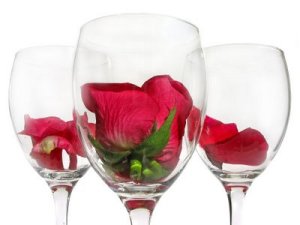
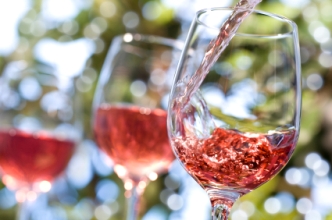
Called rosé in France, rosado in Spain, rosato in Italy, and sometimes even blush in contemporary colloquial lexicon, pink wines in all their variances are wonderfully paired for the hot summer season. Rosé’s sweetness can certainly vary, from bone-dry, old-world Provençal releases to the sweet strawberry flavours of Californian White Zinfandel. So too can the flavours of rosé vary, but they can commonly include palates with strawberry, raspberry, grapefruit, redcurrant, almond, and fresh cut hay.

Rosé wines are made from traditionally red varietals in a number of different ways. The vin gris method for rosé production is generally considered to produce the highest quality wine. With this method, the grape juice is obtained by stacking the harvest in a vertical tank, and letting the natural weight of the grapes crush themselves, during which a very pale pink colour is imparted, most often seen in rosé from Provence. In the next gradation, pressé, the grapes are pressed in the tank until the desired colour is attained. Another common method, limited maceration, involves macerating the grapes, skins and stems for a shorter period of time than normal. This is a process where the tannin, colour and flavour of the grapes impart themselves into the vinum mustum, literally “young wine,” often called must. The skin-contact phenolics give the wine its distinctive rosy colour, and the maceration period can range from several hours to several days before the wine is separated from the must and fermented. The longer the period of contact, the deeper and more tannic the wine, from pale pink to salmon to full bodied bright red. Finally, the saignée method (French for “bleeding”), is quite literally a wine “bled off” from red wine must, used in Bordeaux and Burgundy, most often as an afterthought to the primary red production. Bleeding has occasionally criticised by other producers as “not true rosés,” similar to decolouration, stripping the colours (and often the flavours) off of a fully finished red wine with charcoal filters.

roses
Rosé can come from anywhere in the world, and like any wine, rosé flavour characteristics come from the varietal. Many Provençal rosés, often considered the best in the world, make use of Grenache or Mourvèdre blended with Cinsaut to impart dry, fruity and floral characteristics. Similar results can be found with Pinot Noir, and Sangiovese. Syrah and Cabernet-based rose wines, while still dry, can impart more savoury and meaty characteristics, and finally the strongest grapes like Portuguese Touriga Nacional or American Zinfandel create juicier and sweet rosés respectively. Most rosés are a blend of multiple varietals.

For still rosé wines, it is important to drink the wine fresh. No cellaring required! These summer sippers should be consumed within 1-3 years. Luckily, this also makes rosé among the most affordable styles of wine on the shelf, with a wide array of options available for $25 and under.

Pairing rosé is also remarkably simple. Rosé is versatile for simple sipping, summer salads, fish, and even barbecued chicken or pork because it strikes a medium flavour profile between red and white wines and occupies a broad spectrum of strength and flavours based on the varietal. In particular, the rosés of Provence pairs beautifully with garlic-filled Mediterranean food, which by no accident is common to the region. Like most whites, rosé wines are best served slightly chilled, but beware or over-chilling the wines and reducing the flavours you’ll be able to taste!

Last but not least, don’t forget bubbles! Sparking Rosé is found year round, can include white varietals in the blend, and can be aged spectacularly. The next time you come in to deVine, be sure to ask about your rosé options, and enjoy your summer!

Rosé Recommendations:

2013 Jolie-Pitt & Perrin Cotes de Provence Rosé Miraval (Provence, France) – $28.99

2013 Baillie-Grohman Blanc de Noirs Rosé (Creston, B.C.) – $25.99

2012 Costaripa Rosmara (Lombardy, Italy) – $24.99

2012 Domaine Lafond Roc-Epine Tavel (Rhone Valley, France) – $23.99

2012 Il Feuduccio Cerasuolo Rosé (Abruzzi, Italy) – $22.49

2013 Domaine Houchart Rosé (Provence, France) – $19.99

2012 Chateau d’Astros Rosé (Provence, France) – $18.99

2012 Bodegas Sierra Norte Pasion de Bobal Rosé (Valencia, Spain) – $17.99

2012 Vina Aljibes VA Rosado (Rioja, Spain) – $17.99

2012 Quinta da Alorna Rosé (Ribatejo, Portugal) – $17.49

Sparkling Rosé Recommendations:

NV Rolet Cremant du Jura Brut Rosé (Jura, France) – $26.99

NV Val d’Oca Punto Rosa Millesimato Rosé (Veneto, Italy) – $22.99

NV Bernard-Massard Cuvée de L’Eucusson Brut Rosé (Luxembourg) – $21.99

Enjoy the pinks!

(more…)

May 16, 2014

World Cup of Soccer Tasting

Filed under: deVine's Daily Blog Article — Dirk @ 6:34 pm

fifa_world_cup_14Author: Dirk Chan

Once every four years (this will be the third time for deVine’s) we host this special tasting right in the middle of the world’s most famous soccer tournament, the FIFA World Cup of Soccer – we’ll be tasting wines from some of the participating countries from the hosts Brazil (perhaps a wine from Brazil – how exciting would that be?) to Germany, France, Italy, Argentina, Portugal, United States, Australia and the defending champs Spain. Join us for this event scheduled for Saturday, June 21st at 7pm.

Most of the participating countries would have played two games in the opening group stage by then, so there’ll be some conversation to be had about how your favourite team is doing. What a hoot it was last time, with participants wearing their favourite team jerseys, caps or dressed in flag colors and talking more soccer than wine!

This is a social rather than technical tasting, and football talk will be referee’d strictly and perhaps Chris will lead us in a chorus or perhaps a chant or two…This is a stand-up event, and a not to be missed party on a scale befitting the sport. Now, that’s quite the lineup! Book early as this is always a sell-out.

Book your spot here..

(more…)

Wine Basics

Filed under: deVine's Daily Blog Article — Dirk @ 10:13 am

wine_basicsAuthor: Dirk Chan

Wanting to learn more about wine? Well, it’s time for another session of our ever popular Wine Basics, the introductory wine appreciation themed tasting to be held at deVine’s this coming Thursday, May 22 at 7pm. This 101 tasting is a great way to get into wine.

After the reception wine, we will taste three whites and three reds which are typical of their varietal. We will touch on the essentials of wine appreciation (color, taste, finish), wine serving tips, food pairing and wine etiquette all in an informal, relaxed setting where questions are welcome anytime.

This sit-down event sells out every time, so for those beginners wanting to delve into the world of wine, this is a great starting point.

See the wines and register here..

(more…)

May 5, 2014

What’s the fuss with Belgian Beer?

Filed under: deVine's Daily Blog Article — Dirk @ 1:49 pm

liefmans1Author: Jim Phelan

Why is Belgian brewing so often regarded as the world’s best? Much of it has to do with history and tradition going back two millennia. In Julius Caesar’s conquest of Gaul near the height of the Roman Empire, he wrote that the Belgae were the bravest fighters he encountered. Then, Caesar being Caesar, his fifteenth legion soundly defeated his opponents on the battlefield. This precedent continued for centuries, and though Belgium has struggled to defend again foreign armies, the nation’s brewers nevertheless reaped the rewards of hegemonic cultural influences on local brewing traditions.

Under the 400 years of Roman rule, Rome’s viticulture influenced Belgian brewing in ways still seen today. The Celts were already drinking high potency beers in the age of antiquity, but numerous winemaking applications were applied by brewmasters during this period, notably spontaneous fermentation (found in today’s lambics), cask aging, and bottle conditioning.

As the Roman Empire crumbled in Western Europe, Germanic tribes pushed into Gaul from the East, and the area of Belgium suddenly had new rulers. German culture again blended with the existing Gallic and Roman cultures, but never fully replaced one another. Modern Belgium is in fact divided between French speaking regions in the West (the linguistic product of Roman and Gallic culture blending), and German speaking areas in the East. However, the Germans did bring their wheat and wiessbier brewing techniques to Belgium’s already rich brewing tradition.

The final major pre-Belgian independence shift in brewing came during the 11th century, in the era of the first crusades. With the permission of the Catholic Church local French and Flemish abbeys began brewing and distributing their own beers in small quantities as fundraising for their operations and charitable activities. Their artisanal methods evolved over the centuries into some of the highest regarded breweries in the world. Such beers are split into two certifications: Trappist and Abbey. Trappist beers are a more exclusive certification, whereby the brewery must be in a monastery, the monks must be significantly involved in production and distribution, and all profits from production must support the monastery or its charitable works. “Abbey beers” however, are a term applied to any monastic or even monastic-style beer, commercial or otherwise.

Only ten Trappist breweries currently exist in the world, six of which are in Belgium, and five of which you can find at deVine wines: Achel, Chimay, Orval, Rochefort, and Westmalle. Whether Trappist or Abbey, almost all beers brewed in this tradition conform to three very distinct styles: blond, brune, or tripel. The “dubbel” and “tripel” labels often associated with Belgian beers also stem back to this period. In days before precise measuring, brew strength was best altered by simply adding twice (6-8% ABV), or three times (8-10% ABV) the regular ingredients, and differentiating the beers by differently coloured labelling (Chimay’s white, red, and blue caps) or a numbering system (Rochefort’s 6, 8, and 10).

Over the centuries, more surrounding nations ruled or plundered through Belgium’s low lands, including the Vikings, French, Austrians, Spanish, and Germans multiple more times. While the brewing traditions were set, consistently living under hegemony fostered strong local traditions of resistance against authority and any organised government. As a result, Belgium is home to many corrupt politicians and the world’s highest ratio of debt to GDP. Yet unlike Germany’s strict beer purity laws, Belgium’s brewing community is afforded great stylistic freedom. Since the middle ages, pubs and breweries are often the cultural centres, a factor only bolstered by the breweries associated with abbeys and monasteries. Over the centuries, these local brew masters have been left to their own devices and collectively the community has formed its own traditions and earned a stellar reputation. In addition to the aforementioned Catholic brews, Belgium is home to a number of other distinctive beer styles.

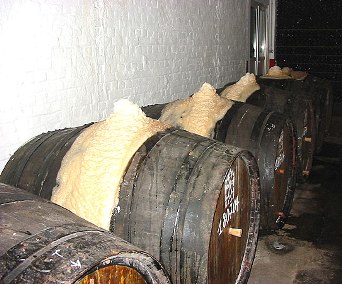
Most distinctively, lambics are top-fermented wheat beers which are exposed to spontaneous fermentation. That is, rather than conventional beers which are carefully fermented by cultivated yeast strains, lambic is exposed in the open air to wild yeast and bacteria. In Belgium lambic is produced in the Pajottenland region in and around Brussels, and the yeasts infecting the beers are to the local Zenne valley. This idiosyncratic process of spontaneous fermentation gives lambic its uniquely tart, sour flavours. Brewed in the ideal winter months, up to eighty identifiable microorganisms can be found within a single lambic. Lambics were among the first beers to use hops, since at least the 11th century, for antibacterial preservation and the bitter, citrus-like qualities they contribute to the palate. All lambics are produced with aged, dried hops for decreased bitterness. After fermentation begins, lambics are moved into oak barrels, most often from sherry or port, then matured from anywhere between one to three years. Finally, many lambics are blended either between different ages (gueuze), or sweeted with fruit for a tart summer beverage (for instance Kriek and Boon), often with secondary fermentation.

spontateuos_fermantation

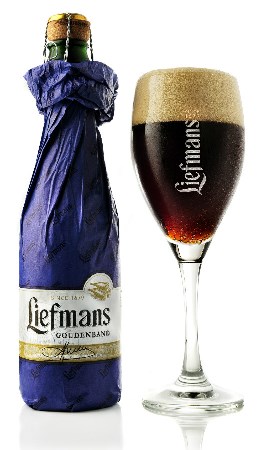
Flemish or Flanders red ale is Belgium’s sour version of ale, usually brewed out of West Flanders. Similar in origins to an English porter, these red ales are given sour notes by more classical direct fermentation. These beers also undergo extensive aging, and their distinctive red colour is supplied by red malt. The palate is often described as a less intense sour note to lambic, though still intense, with pronounced fruit elements, and even wine-like tannins. Try the Duchesse de Bourgogne and Rodenbach at deVines to get to know the best examples of this ale. Try Goudenband as a brown ale cousin to this same style.

Witbier in dutch, blanche in French, and sometimes called white beer in English, is a Flemish beer also brewed in Belgium since the middle ages. The oft-used ‘wheat’ English name for this style is actually somewhat erroneous, since most wits come from a mixture of wheat and barley where the former is simply used in greater quantities than normal. True Belgian witbier also contains gruit, a mixture of flavouring and preservative herbs often including coriander and orange peel, which pre-dated the wide availability of hops in Europe. Try the St. Bernardus Wit for an exemplarily release of this style.

Contemporarily, Belgium is home to about one hundred and eighty breweries, from trappist microbreweries to the world’s largest brewing conglomerate, producing everything from blond ales to blended lambics. Nearly every style of beer has its own style of glass to bring out the best olfactory experience from the brew. The Romans, Germans, and multitudes of our nationalities still move into Belgium today, but only for a few weeks at a time, in much smaller groups, stay in hotels, and seem satisfied with consuming Belgium’s world-famous beer.

Here are a few links to the breweries mentioned in this article (there’s much more, but you’ll have to visit the store for the rest):

Achel 8° Bruin – 330mL ($5.99)


Orval – 330mL ($6.99)


2012 Boon Kriek Cherry Lambic – 375mL ($8.99)


Verhaeghe Vichte Duchesse de Bourgogne – 330ml ($5.99)


Liefmans Goudenband – 375mL ($8.99)


St. Bernardus Witbier – 330mL ($4.99)

Salute Everyone!

(more…)

April 22, 2014

Beers from Belgium

Filed under: deVine's Daily Blog Article — Dirk @ 11:47 am

tilquinAuthor: Jim Phelan

Belgium’s brewing tradition goes back centuries, and Belgian beers are famous the world over as some of the world’s best. The next time you come into deVine, be sure to check out our new selection of Belgium’s best offerings, situated over the France wine section.

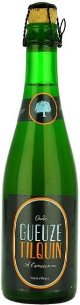
Beers of note include St. Bernadus Witbier, consistently ranked as the globe’s best wit, Dupont Avec les Bons Voeux, a rare, rich and complex 100 point ale originally only offered to preferred customers of the brewery, De Ranke Kriek, semi-sweet fruit beer with added crushed cherries and corked like champagne, Ooude Gueze Tilquin a l’Ancienne, a type of beer unique to Belgium made by blending 1, 2, and 3 year sour lambics to fuel re-fermentation and complex bottle conditioning, and Houblon Chouffe, and blend of tripel and double India pale ale from acclaimed Ardennes producer La Chouffe, whose signature gnome adorns every label.

We’ve vastly expanded our craft beer selection, you will find a lot of new product on top of our various wine units corresponding to their respective countries. Do visit and check it out!

Here are links to the above recommended products:

St. Bernardus Witbier – 300mL Bottle – $4.99

Brasserie Dupont Avec les Bons Voeux – 750mL Bottle – $13.49

De Ranke Kriek – 750mL Bottle – $17.49

Tilquin Oude Gueuze Tilquin a l’Ancienne – 375mL Bottle – $11.99

d’Achouffe Houblon Chouffe Dobbelin IPA Tripel – 330mL Bottle – $5.99

Enjoy Spring everyone!

(more…)

April 15, 2014

Easter Dinner Wine Recommendations

Filed under: deVine's Daily Blog Article — Dirk @ 9:16 am

turkeyAuthor: Dirk Chan

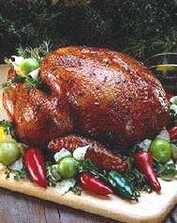
Another Easter is upon us, and we tend to receive many Easter Dinner wine pairing requests. If you have an unique dinner planned other than the traditional turkey and ham, then by all means bring your menu into the store or drop us a line, and we would be happy to choose specific matches to enhance your special evening.

For those doing turkey and ham and all the cranberry fixings, here are a few favourites at deVine’s that will suit the bill nicely:


Bubbles:

  • NV Bodegas Pinord Dibon Brut Cava (Penedes, Spain) – $15.99
  • NV Cantina Colli del Soligo Prosecco Solicum (Veneto, Italy) – $21.99
  • NV Gremllet Brut Selecton (Champagne, France) – $44.99
  • NV Nicolas Maillart Brut Rosé (Champagne, France) – $71.99
  • 2000 Pol Roger Cuvée Sir Winston Churchill Brut (Champagne, France) – $214.99
  • 2005 Louis Roederer Cristal Brut (Champagne, France) – $349.99

  • Whites:

  • 2012 Boutari Moschofilero (Greece) – $16.99
  • 2012 Bellingham Bernard Old Vine Chenin Blanc (Coastal Region, South Africa) – $23.99
  • 2011 Kettle Valley Pinot Gris (Naramata Bench, B.C.) – $34.49
  • 2010 Donnhoff Oberhauser Brucke Riesling Spatlese (Nahe, Germany) – $76.99
  • 2009 Domaine de Chevalier (Pessac-Leognan, Bordeaux) – $229.99

  • Rosés:

  • 2012 Bodegas Sierra Norte Pasion de Bobal Rosé (Valencia, Spain) – $17.99
  • 2012 Costaripa Rosamara (Lombardy, Italy) – $24.99
  • 2012 Baillie-Grohman Blanc de Noirs Rosé (Creston, B.C.) – $24.99

  • Reds:

  • 2012 Undurraga Sibaris Reserva Pinot Noir (Maipo Valley, Chile) – $16.99
  • 2011 Domaine Manoir du Carra Fleurie (Beaujolais, France) – $26.99
  • 2011 Domaine de Cristia Gigondas (Rhone Valley, France) – $32.99
  • 2005 La Gerla Brunello di Montalcino (Tuscany, Italy) – $69.99
  • 2009 Forman Cabernet Sauvignon (Napa Valley, California) – $94.99
  • 2005 Torbreck Les Amis Grenache (Barossa Valley, Australia) – $234.99
  • 2006 Tua Rita Redigaffi (Tuscany, Italy) – $349.99

  • Denouement:

  • 2012 Marchesi di Barolo Moscato d’Asti Zagara (Piedmonte, Italy) – $23.99
  • 2011 Mullineux Straw Wine – 375mL (Swartland, South Africa) – $32.99
  • 1988 Chateau Rieussec – (Sauternes, France) – $244.99
  • 1982 Messias Colheita (Douro, Portugal) – $89.99
  • 1983 Gould Campbell Vintage Port (Douro, Portugal) – $101.99
  • These are but just a few recommendations, there’s much more to choose from, but do shop early for the best selection.

    Here are the special store hours for the long weekend:

    Good Friday, April 18 – 10am to 6pm
    Saturday, April 19 – 10am to 7pm
    Sunday, April 20 – CLOSED
    Monday, April 21 – 10am to 6pm

    Happy Easter everyone!

    (more…)

    April 2, 2014

    Annual Tour of Italy Festival

    Filed under: deVine's Daily Blog Article — Dirk @ 3:39 pm

    torrioneAuthor: Dirk Chan

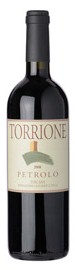
    Our popular annual Tour of Italy tasting at deVine’s is set for Thursday, May 15 from 7pm to 9pm featuring Italian wines from our friends from Vendemmia International Wines.

    Led by former deViner Hayley McRae and the staff of deVine’s, we will set up various stations with wines from every region of Italy from the North (Piedmonte, Veneto, Friuli, Trentino-Alto-Adige), Central (Tuscany, Marches, Abruzzo, Umbria), South (Campania, Sicily, Sardegna) and Specialty (Spirits and Sparkling). This is a great way to discover why Italian wines are one of the most popular sections in our store always displaying their great diversity of grapes, terroir, style as well as their wonderful food pairing ability.

    There are a total of 60 spots available for this standup, festival style event, it’s selling quickly so please register early to avoid disappointment. You can register online for this event
    here..

    (more…)

    March 31, 2014

    A Rare 50 Year Old Tawny Port

    Filed under: deVine's Daily Blog Article — Dirk @ 9:52 am

    taylor_64Author: Dirk Chan

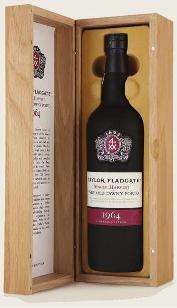
    Launched in January of this year, the never seen before 1964 Taylor-Fladgate Limited Release Single Harvest Tawny Port – $279.99 is the first of an annual release of product that has been aged for five decades from this producer’s extensive reserves. For those of you with birthdays or anniversaries of 50 years, this is a rare and unforgettable gift item for anyone celebrating this memorable milestone.

    During its five decades of aging in seasoned oak casks, this tawny has taken on an attractive pale mahogany color with olive amber highlights. On the nose the wine displays fine oaky aromas and complex spicy, nutty, cigar box notes against a warm mellow background of butterscotch and molasses. The smooth velvety palate is lifted by a crisp acidity which gives the wine an attractive freshness in spite of its age. The finish is immensely long with rich, spicy, black pepper flavors lingering on the palate.

    Taylor’s has decided to make a limited release, each year, of a Single Harvest Port made 50 years previously. Look for the exceptional 1965 next year. Further annual releases of 50 year old Single Harvest Ports will follow.

    Needless to say, extremely limited availability.

    Check out the 1964 Taylor Fladgate Very Old Single Harvest Port here..

    (more…)

    March 17, 2014

    Annual Tour of Italy Festival

    Filed under: deVine's Daily Blog Article — Dirk @ 10:24 pm

    santagostinoAuthor: Dirk Chan

    Our popular annual Tour of Italy tasting at deVine’s is set for Thursday, May 15 from 7pm to 9pm featuring Italian wines from our friends from Vendemmia International Wines.

    Led by former deViner Hayley McRae and the staff of deVine’s, we will set up various stations with wines from every region of Italy from the North (Piedmonte, Veneto, Friuli, Trentino-Alto-Adige), Central (Tuscany, Marches, Abruzzo, Umbria), South (Campania, Sicily, Sardegna) and Specialty (Spirits and Sparkling). This is a great way to discover why Italian wines are one of the most popular sections in our store always displaying their great diversity of grapes, terroir, style as well as their wonderful food pairing ability.

    There are a total of 60 spots available for this standup, festival style event, it’s always a quick sellout so please register early to avoid disappointment. You can register online for this event here..

    (more…)

    « Newer PostsOlder Posts »

    Powered by WordPress